What Are the Best Niches for an AI Automation Agency in 2026?
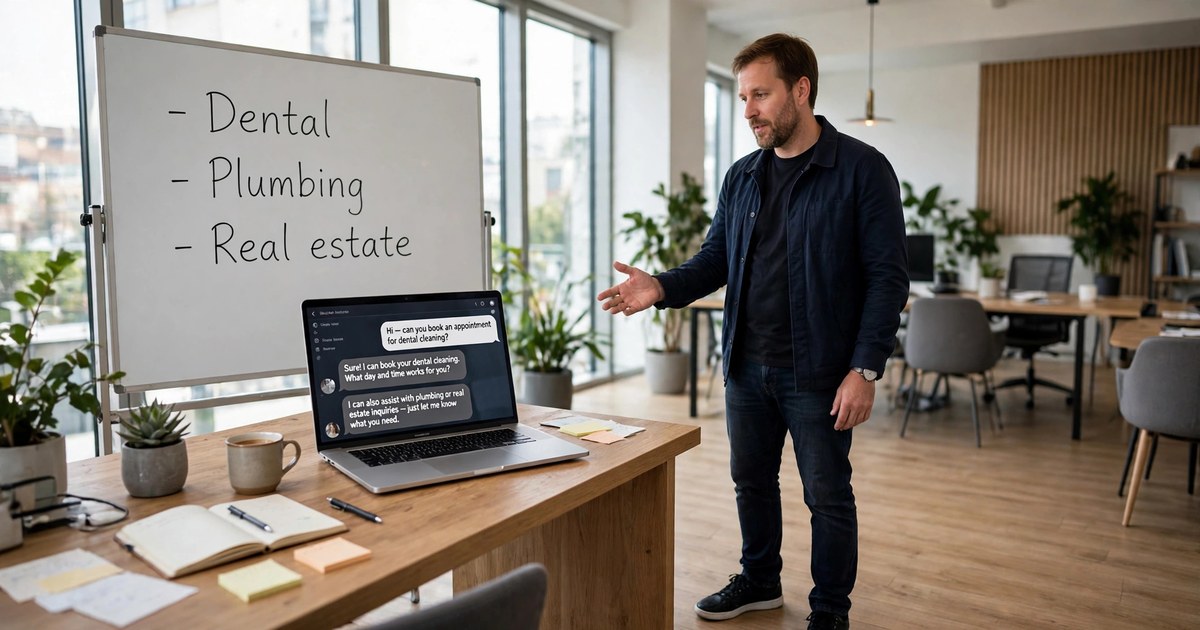
The best niches for an AI automation agency in 2026 are dental clinics, med spas, roofers, HVAC firms and real estate agents. They win because they miss calls daily, every missed call is worth real money, and one chatbot workflow can be sold again and again. Pick one niche, learn its daily messages, and sell the fix, not the tech.
Most niche lists you find online read like someone copied last year's list and changed the date. They rank niches by how exciting the technology sounds, not by who pays, how fast, and how often. That is the wrong order. An agency does not eat excitement. It eats signed monthly plans from businesses that feel the pain every single day.
This guide is written from the other side of the desk. We build done-for-you chatbots for local businesses, so we see which niches answer fast, pay on time, and ask us to build the same thing for their second branch. We also see which niches haggle for weeks and vanish. The ranking below comes from that chair, not from a theory. If you want the tooling side first, our guide to the best WhatsApp automation tools for small business shows what sits underneath a good niche build. And if you want to see what a done-for-you build actually looks like, our custom chatbot development services page walks through it.
One honest note before the list. Semrush recorded 390 searches a month in the US for this exact keyword, with a keyword difficulty of 6 percent and no paid competition behind it. That tells you founders are actively hunting for this answer right now. It also tells you the field is still open. Small agency blogs hold the top spots, not giant brands, which means a better, more honest guide has a real shot at ranking.
How Do You Score a Niche Before You Chase It?
Every niche looks good on a sales call. The owner is keen, the problems sound big, and the deal feels close. Then month two arrives, the owner stops replying, and you learn the niche never had money in the first place. A scorecard stops that. Score every niche from 0 to 5 on four signals, add them up, and only chase niches that reach 14 out of 20. A score of 10 to 13 means run a small paid test first. Below 10, walk away, no matter how friendly the owner is.
Signal one is repetitive message volume. Does this business get the same ten questions all day? Opening hours, prices, booking, directions, "do you take my insurance", "can I reschedule". A dental clinic gets those messages from morning to night. A boutique branding studio does not. High repetition means a chatbot can take real work off a human's plate on day one, and the owner can feel it.
Signal two is a payer with a budget. The business must already spend money to fix problems. Dentists pay for reception staff, booking software, and ads. Roofers pay for lead generation. If a niche has never paid anyone for anything, it will not start with you. Look for businesses that already pay for tools, staff, or leads. That habit matters more than the size of the business.
Signal three is measurable return. Can you point at a number and say "we made you this much"? Missed calls turned into booked visits. No-shows cut by reminders. After-hours messages answered instead of lost. If the return is vague, like "better brand awareness", the client will cancel the moment cash gets tight. If the return is a booked job worth thousands, the client renews without thinking.
Signal four is a repeatable workflow. Can you build the chatbot once and sell nearly the same build to the next ten businesses in the niche? Dental clinics all need the same booking flow, the same insurance questions, and the same reminder messages. That is a product. A niche where every client wants something totally different is custom work, and custom work does not scale for a small agency.
Run the scorecard honestly. Most niches score well on one or two signals and fail the rest. The ones below score well on all four, and the maths in the next section shows why.
Which 5 Niches Pay the Most in 2026?
Here is the ranking, in order, with the scorecard result and the maths for each. These five share one trait: the phone rings, nobody picks up, and the missed call is worth real money.
- Dental clinics, score 18 out of 20. A typical small clinic takes about 30 calls a day. Around a quarter of those go unanswered, because the receptionist is with a patient or the clinic is closed. That is 7 or 8 missed calls a day. Over 22 working days, that is about 176 missed calls a month. If only one in four of those callers would have booked a first visit worth 150 dollars, the clinic quietly loses 44 bookings, or 6,600 dollars, every month. A chatbot that answers instantly, books the visit, and sends a reminder can recover half of that, which is 3,300 dollars a month for a service that costs a fraction of it. Dental clinics also pay reliably, and every clinic needs the same flow, so this niche tops the list.
- Med spas, score 17 out of 20. A med spa lives on bookings, and most booking questions arrive after hours, when nobody is at the desk. Say the spa gets 20 booking messages a month that go unanswered until the next morning, and half those people book somewhere else by then. At an average treatment value of 180 dollars, that is 10 lost bookings, or 1,800 dollars a month, gone to a rival. Add no-shows, which reminders cut sharply, and the chatbot pays for itself many times over. Retainers in this niche are strong too: Duaction's 2026 list puts med spa retainers at 3,000 to 6,000 dollars a month, and financial services at 3,000 to 7,000 dollars a month, which shows what agencies charge where the job value is high. You can read their full list on Duaction's best niches for AI automation agencies in 2026. For a closer look at this niche, see our guide to the AI chatbot for med spa.
- Roofers, score 17 out of 20. Roofing is the clearest maths in this whole guide. One booked roof job is often worth 12,000 dollars or more. A roofer who answers WhatsApp messages after hours can win one extra inspection a week, which is four a month. If one in four inspections turns into a signed job, that is one extra job a month, or 12,000 dollars. Even at half that pace, one extra job a quarter still averages 4,000 dollars a month. Roofers also answer fast, decide fast, and tell other roofers, which makes referrals easy. The work is seasonal in cold states, so sell the chatbot before the busy season, not during it.
- HVAC and plumbing firms, score 16 out of 20. These businesses live on urgent calls: a broken boiler in winter, a leak on a Sunday. The caller does not want a clever chat. They want to know someone is coming, and when. A chatbot that takes the address, the problem, and a photo, then books the first open slot, wins jobs that used to go to whoever picked up first. Emergency call-outs carry high fees, so one saved call a week can cover the monthly plan many times over. The niche is crowded with agencies, though, so you need a sharp offer and a fast demo, not a generic pitch.
- Real estate agents, score 15 out of 20. Agents miss leads because they are out showing houses while their phone rings. A chatbot that answers a listing question in seconds, asks for a budget and a timeline, and books a viewing keeps the lead warm until the agent calls back. One extra closed deal a year can be worth thousands in commission, so the return is easy to explain. The weakness is churn: many agents are solo, budgets swing with the market, and some will cancel after a slow month. Sell to teams and brokerages with steady lead flow, not to a single agent who just got their licence. Our guide to the AI chatbot for real estate agents shows how the viewing-booking flow works in practice.
What About the Next 4 Niches Worth a Look?
The top five get the headlines, but the next four are where a new agency can win without fighting every other agency in town. They score a little lower, usually because the job value is smaller or the buying habit is weaker, but each one has a clear, repeatable pain.
- Small law firms, score 14 out of 20. Personal injury and family law firms lose clients the same way dentists do: the phone rings while everyone is in a meeting or in court. A chatbot that takes the caller's name, the type of case, and a good time to call back turns a missed call into a consultation. One signed case can be worth thousands, so the maths works. The catch is compliance. Law firms worry about giving legal advice by accident, so the chatbot must collect details and hand over to a human, never answer legal questions. Get that line right and the niche trusts you.
- Auto repair shops, score 14 out of 20. A repair shop's day is full of "how much for brakes on a 2019 Civic" and "can you fit me in tomorrow". A chatbot that asks for the car, the problem, and a photo, then offers the next open slot, fills the diary without the front desk stopping work. The job values are smaller than roofing, so charge a modest monthly plan and win on volume: five shops at a fair price beat one big client who haggles. Shops also cluster together, so one happy owner can introduce you to three more on the same street.
- Gyms and fitness studios, score 13 out of 20. Gyms lose members quietly. Someone asks about a trial class on Instagram at 9 at night, gets no reply, and joins the gym down the road. A chatbot that answers in seconds, books the trial, and sends a reminder before the class turns cold messages into paying members. The weakness is price sensitivity: a small studio watches every dollar, so keep the offer simple and show the trial bookings in the first month. Big gym chains are a different game with slow procurement, so stick to independent studios.
- Property managers, score 13 out of 20. A manager with 200 doors gets the same maintenance questions all week: leaks, keys, rent dates, viewings. A chatbot that logs the issue, asks for photos, and routes emergencies to the right person saves hours of phone tag. The niche is steady and the contracts last, because switching is painful. The hard part is getting in: managers are busy, sceptical, and already have software. A short demo using their real messages works better than any slide deck.
A word on the wider market before you pick. Leadlock's guide to niches that pay draws on a Ciela AI benchmark covering more than 400 agencies, which is a useful sense-check on where agency money actually flows. You can read it on Leadlock's AI automation agency niches that pay. Use lists like that as a starting point, then run your own scorecard.
What Does an Agency Actually Sell in Each Niche?
Want this running on your website?
ReplyPilot builds the whole flow for you — capture, qualification, routing and follow-up — trained on your business and tested before it goes live, with a free custom demo before you decide anything.
Ask on WhatsApp — it's freeHere is the part most niche lists skip: the delivery. A niche is only good if you can say, in one sentence, what the client gets and what it costs. In almost every niche above, the offer is the same shape: a chatbot on the website, WhatsApp, and Instagram that answers the ten most common questions, books the visit or the job, sends reminders, and hands tricky cases to a human. The niche changes the questions and the booking flow. The engine stays the same, which is why the work is repeatable.
Take the dental clinic again. The build answers opening hours, insurance, prices, and directions. It books new patient visits, moves existing ones, and sends a reminder the day before, which cuts no-shows. After hours, it takes the message and books the caller for the morning, instead of letting them ring the next clinic. The roofer's build is different on the surface: it asks for the address, the roof problem, and a photo, then books an inspection. Underneath, it is the same pattern: answer fast, collect the details, book the slot, remind the customer.
ReplyPilot builds AI chat agents for local businesses that answer customer messages on WhatsApp, Instagram and the web. That is the product at the centre of this whole guide: a done-for-you build, not a tool the client has to learn. Our setup is 249 dollars, split as a 125 dollar deposit and 124 dollars on go-live, and the Care Plan is 99 dollars a month. Those are the real numbers, and they are low on purpose: a small business can say yes without a board meeting, and the agency can sell the same build many times. If you run an agency, that price shape matters more than any feature list, because a niche only works when the client can afford to say yes quickly.
One question that comes up in every niche call is what happens when the chatbot cannot answer. The honest answer is that it hands over. A good build knows its limits and passes the chat to a human with the full history attached, so the customer never repeats themselves. If you want to see how that handover looks in a booking-heavy niche, our AI chatbot for med spa guide walks through it step by step.
Which Niches Should You Avoid in 2026?
Saying no is half the job. These niches look tempting, but they fail the scorecard in ways that cost a new agency months.
- Restaurants. They have thin margins, high staff turnover, and owners who are busy during every hour you want to call. A chatbot can take bookings, but most restaurants already have a booking tool, and the ones that do not will not pay for one. Churn is high and the budgets are low.
- Coaches and course sellers. They love AI, they talk a lot, and they rarely pay on time. Their income swings with launches, their audiences are small, and many want a chatbot that sells a course, which is a sales job, not a support job. Avoid until you have cash flow from steadier niches.
- Dropshipping and brand-new online stores. A store with no customers does not need a chatbot. It needs customers. The owner will blame the chatbot for slow sales, cancel after a month, and ask for a refund. Wait until a store has real daily messages, then it becomes a decent client.
- Crypto and web3 startups. The money sounds big and the founders sound confident, but the niche is unstable, the rules change fast, and the clients vanish with the market. A local business that has been open for ten years is a safer bet than a startup that may not exist in spring.
- One-person Etsy sellers and hobby shops. They are lovely people and terrible clients. They have no budget, no daily message volume, and no staff to hand over to. A chatbot saves them nothing, because they already answer every message themselves.
- Nightclubs and event promoters. The work is seasonal, the decisions are late, and the payment follows the event, not the calendar. A monthly plan does not fit a business that earns in bursts and goes quiet for weeks.
None of this means these businesses are bad. It means they are bad first clients for an agency that needs steady, paying work. Come back to them later, when you can afford a slow payer.
How Do You Win Your First Client in a New Niche?
Picking the niche is the easy part. Winning the first client is where most founders stall, because they try to sell to everyone at once. Do it in a narrow, patient way instead.
Start by talking to ten owners in the niche before you build anything. Ask what messages they get all day, what they miss, and what a missed call costs them. Write down their exact words. Those words become your sales page, your demo, and your chatbot's answers. A founder who can repeat a dentist's own complaint back to them sells faster than one with a shinier demo.
Next, build one demo with real messages from that niche. A dental demo that books a cleaning and answers an insurance question beats a generic demo every time. Show it to the owner on their own phone, using their own business name. When they see their clinic answering at 11 at night, the sale is mostly done.
Then offer a short paid pilot, not a free trial. A two-week paid pilot with a clear price and a clear result, like booked visits or answered messages, filters out time-wasters and proves the value. Free trials attract owners who were never going to pay. A small payment, even a modest one, changes the whole conversation: the client pays attention, gives feedback, and tells other owners.
After the first client is happy, ask for two things: a short written note about what changed, and an introduction to one other owner in the same niche. That is how a niche business grows. One clinic becomes three, then the local dental group, then the neighbouring town. The same path works for roofers, spas, and repair shops. Stay in the niche long enough to learn its language, and the niche starts selling for you.
Where Should You Start This Week?
Start with one niche, not five. Look at the ranking, run the scorecard on your own town, and pick the niche where you already know someone or can get ten conversations fast. Dental clinics are the strongest pick for most new agencies, but a roofer you already know beats a dentist you cannot reach.
Give yourself two weeks. Week one is conversations and one demo. Week two is the pilot offer and the first signed client. If the niche will not give you ten conversations, it is telling you something, and you should listen: pick the next niche on the list and start again. The goal is not to find the perfect niche. It is to find a paying niche and learn it deeply.
When you are ready to see what a done-for-you build looks like from the inside, the next page to open is our custom chatbot development services. It shows the build, the pricing, and the care plan in one place, so you can judge the offer the way your own clients will judge yours.
Frequently Asked Questions
What is the most profitable niche for an AI automation agency in 2026?
Dental clinics are the most profitable starting niche for most agencies, because they miss calls every day, each missed call can be worth 150 dollars or more, and the same booking and reminder workflow sells to clinic after clinic. Med spas and roofers are close behind, with higher job values but a little more competition for the work.
How much can an AI automation agency charge for a niche build?
It depends on the niche and the job value, but small-business chatbot builds often start with a modest setup fee and a monthly care plan. As a real example, ReplyPilot charges 249 dollars for setup, split as a 125 dollar deposit and 124 dollars on go-live, with a Care Plan at 99 dollars a month. Higher-value niches like med spas and financial services can support larger retainers, as shown in published agency pricing lists.
Do I need to pick only one niche when I start my agency?
Yes, pick one niche first. One niche lets you learn the real questions, build the workflow once, and reuse it for the next ten clients. Agencies that chase five niches at once end up with five half-built offers and no referrals. You can add a second niche later, once the first one is paying steadily.
What services do AI automation agencies actually deliver to a niche?
The core delivery is a chatbot on the website, WhatsApp, and Instagram that answers the ten most common questions, books visits or jobs, sends reminders, and hands tricky cases to a human. Around that core, agencies add missed-call text-back, review requests, and simple follow-up messages. The niche changes the questions and the booking flow, while the engine underneath stays the same.
Which niches should a new AI automation agency avoid in 2026?
Avoid restaurants, coaches and course sellers, brand-new dropshipping stores, crypto startups, one-person hobby shops, and nightclubs. They fail the scorecard on budget, message volume, or payment reliability, and they cost a new agency months of unpaid work. Come back to them later, once steadier niches like dental, med spa, and roofing are paying every month.