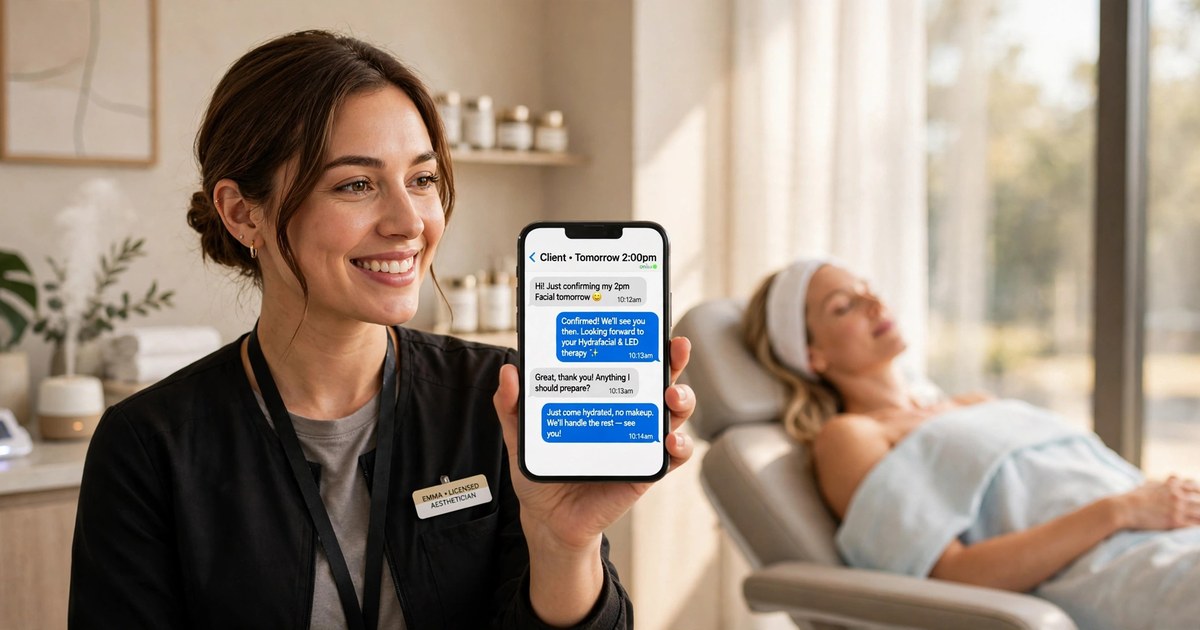
Take Maya, a fictional medspa owner, as an example. Her small clinic, which we will call Glow Room Medspa, has two treatment rooms, one front desk, and a phone that seems to ring at the worst possible moments. A client is lying back for a facial. Another client is mid-treatment with numbing cream on her face. The front desk person is helping someone check out, and at that exact moment, three new messages arrive online. One person asks about Botox prices. One person asks if Saturday morning is open. One person asks what she should do after her appointment tomorrow. None of those people can wait long. They are shopping around, and they will message the next clinic on their list if no one answers soon.
A chatbot built for a medspa does not replace Maya or her team. It stands at the front door while they do the skilled work inside. It greets people in plain words. It answers the same fair questions again and again without getting tired. It books a consult only when the person is ready, and it follows up after the visit with simple care notes. In this article, you will see how that works in real medspa life, what questions it should answer first, how deposit-backed booking protects the diary, and how to pick a tool without buying features you will never use. You will also find a plain rollout plan you can copy, step by step, for a clinic like Maya's.
For a medspa, an AI chatbot means a friendly online helper that answers questions, explains treatments in plain words, checks consultation availability, books a visit with a deposit, and sends simple aftercare reminders, even when staff are busy in a treatment room or the clinic is closed for the evening.
Why medspa enquiries slip away after hours
People do not plan beauty treatments only during office hours. They think about them after work, after dinner, and on weekends, when they finally have a quiet minute to look in the mirror and search on their phone. A busy parent may search at night after the kids are in bed. A nurse on night shifts may message early in the morning. A bride-to-be may send questions on a Sunday while she plans her wedding timeline. If the clinic replies only the next working day, that spark of interest has often cooled. The person may have found another clinic, changed her mind, or simply got busy again and forgot to follow up.
Inside the clinic, the problem is just as real. A medspa is not a call centre. Staff cannot stop mid-treatment to pick up the phone. An injector cannot leave a client to answer a pricing question. A skin specialist cannot pause a peel to check the diary. Even a front desk person has hands full with check-ins, payments, consent forms, and clients standing right in front of her. When the phone rings during a treatment, it either interrupts care or it goes unanswered. Both choices cost something. Interrupting care feels rushed for the client in the chair. Missing the call feels cold for the person trying to book.
A chatbot solves this split by handling the first chat at once, day or night. It does not need a break. It does not get flustered when five people message at the same time. It can say hello, ask what treatment the person has in mind, and guide her to the next clear step. It can also be honest about its limits. When a question needs a trained eye or a licensed professional, a good chatbot says so and books a consult instead of guessing. That honesty builds trust. People like knowing they will talk to a real person before any treatment decision is made. Salons face a similar rush, as shown in the AI chatbot for salons article.
What a medspa chatbot should answer first
The first questions from a new medspa client are almost always the same, and they are fair questions. How does Botox pricing work, and is it charged per unit or per area. What is the difference between Botox and filler in plain words. How long does a treatment visit take. Do I need a consult first. Do I need a patch test before certain treatments. What should I avoid before my visit. A chatbot should answer these in short, clear sentences, without medical claims and without pushing a person toward a treatment she has not discussed with a professional.
Botox per-unit pricing questions deserve a careful answer. People hear a per-unit price somewhere else and then wonder why their total is different. A good chatbot can explain that the total depends on the areas treated and the plan agreed in the consult, and that the final plan is always set by a licensed professional in person. It should not quote a fixed total for a face it has never seen. That restraint is not a weakness. It is exactly what a careful client wants to hear. It shows the clinic will look, listen, and plan, rather than sell a fixed package over chat.
Filler questions need the same care. People ask about ranges, about how long results tend to last in general terms, and about what a consult covers. The chatbot can explain the consult process, what happens at the first visit, and what aftercare usually looks like in general words. It can also explain deposit-backed booking, so the person knows a small deposit holds her consult time and what happens if she needs to move it. Clear booking rules, shared early, prevent awkward talks later. No one likes a surprise at the front desk.
Patch-test and consultation-first rules should be front and centre, not buried in small print. Some treatments need a patch test first. Some skin types need a longer talk before any plan is made. A chatbot can ask a few gentle screening questions and route the person to a consult when needed. It can say, in plain words, that safety checks come before booking a treatment slot. That order protects the client and protects the clinic. It also saves time, because people arrive at the consult already knowing what to expect. Dental clinics handle consult-first rules in a similar way, as shown in the AI chatbots for dental clinics article.
How booking with a deposit changes no-shows
An empty injector chair is one of the most expensive quiet moments in a medspa. The room is ready. The staff member is ready. The products and time are set aside. Then the client does not show up, and that hour cannot be sold again at short notice. One missed consult may not feel huge on its own, but a pattern of missed consults leaves gaps all week. The team still gets paid. The rent still needs paying. The diary just looks full on paper and thin in real life.
Deposit-backed consult booking changes that pattern without sounding harsh. When a person pays a small deposit to hold a consult, she has already made a real choice. She is more likely to turn up, and more likely to tell the clinic early if she needs to move her time. The chatbot can explain the deposit in friendly words, share the reschedule rule, and take the booking right there in the chat. There is no long back-and-forth over email. There is no phone tag. The person picks a time, confirms the deposit step, and gets a clear confirmation message she can check later.
The chatbot can also send a gentle reminder before the visit. A short message the day before, and another on the morning of the visit, helps busy people remember. Life gets in the way for good reasons. A child gets sick. Work runs late. Traffic builds up. A reminder gives the person a chance to move the booking early, so the clinic can offer that slot to someone on the waitlist. That is better for everyone. The original client keeps her deposit path clear under the clinic's own rules, and the clinic fills a slot that would otherwise sit empty.
Memberships and repeat visits made simple
Many medspa clients do not want a one-time visit. They want a steady routine. A monthly Glow-style membership, for example, can give a client a regular facial or a set plan she can look forward to each month. The trouble is that membership questions often arrive as loose chats. What is included each month. Can I pause for a holiday. Can I share it with a friend. What happens if I miss a month. Staff answer these one by one, often while juggling the diary, and the answers can differ from person to person.
Repeat visits get easier when the chatbot remembers the shape of the last chat, not private clinical details it should not store in chat. It can ask if the person wants the same type of visit as last time, offer the next open slot, and confirm the booking in one short thread. That ease is why people stay. A client who can rebook in under a minute is far more likely to keep her routine than a client who must call, wait, and explain everything again. Small frictions add up, and small easings add up too, in the clinic's favour.
Wondering how WhatsApp replies fit into this routine, and what a steady message flow looks like after the first visit, is a natural next question. The answer lives in the best WhatsApp automation tools guide, which walks through message timing, follow-up notes, and simple automation ideas for small businesses in plain words. That guide pairs well with this article, because medspa clients often prefer WhatsApp for quick questions and reminders, while the consult itself stays in person. A clinic can use both channels well, as long as clinical questions always go to a licensed professional and booking talk stays clear and short.
See it answer your customers' questions
ReplyPilot builds a website chatbot trained on your services, your prices and your booking rules — it answers in seconds, books the job, and passes tricky conversations to you with the full history attached.
Ask on WhatsApp — it's freeThe aftercare follow-up that keeps clients coming back
Aftercare is where a medspa shows its care after the payment is done. A client leaves with a lot to remember. She may feel excited, a little nervous, and unsure what is normal in the first day or two. A short, well-timed message can settle those nerves. It can remind her, in general words, to avoid sun after certain treatments, and to skip the gym for 24 hours after certain visits, where the clinic's own aftercare notes say so. It can remind her when to come back for a review, and it can invite her to message the clinic if she has a worry, so a real person can help.
These messages must stay general and safe. A chatbot should never diagnose, never judge a photo, and never tell a person that a symptom is fine. Clinical questions always go to a licensed professional. That one line should appear in the chatbot flow, in aftercare messages, and in any FAQ about results or reactions. It protects the client, and it protects the clinic's good name. A chatbot that knows its limits earns more trust than one that pretends to know everything. Clients can tell the difference, and they respect the careful clinic more.
How to compare medspa chatbot tools without getting lost
Shopping for a chatbot can feel noisy, because many tools promise the same things in different words. A calm way to compare them is to test the exact chats your clients actually send. Send the Botox pricing question. Send the filler question. Send the patch-test question. Send the membership question. See which tool answers in plain words, which tool books a consult cleanly, and which tool hands over to a human when the question turns clinical. A tool that sounds clever but books badly will not help a busy clinic.
Semrush, checked through PowerSEOTool on 4 November 2026, records the phrase ai chatbot for medspa at 90 searches a month, with a keyword difficulty score of 8 percent and a cost per click of $0, and the trend is rising. That rising trend fits what clinic owners see in their own inboxes, where more people now start with a chat message rather than a phone call. A manual search check on 5 November 2026 found vendor pages from Zellyfi, ClinicEcho, ClinicConvo, Adine AI and SignalCore on page 1, which shows a busy field with several tools aimed at clinics like yours. Looking at those pages side by side helps you see what each tool leads with, whether that is booking, reception help, or follow-up messages.
Two vendor pages are worth opening as part of that comparison. The Zellyfi medspa chatbot page shows how one vendor frames its medspa chatbot, and the ClinicEcho med spa receptionist page shows how another vendor frames reception help for med spas. Read them for structure, not just for claims. Note what each page explains first, how it handles booking, and whether it explains handoff to a human clearly. That reading habit will help you judge any tool, including tools beyond these two, by the same fair test.
Prices on vendor pages also tell part of the story, and they should be read with care. ClinicConvo lists plans from US$99/month. Adine AI lists plans from $199/month with one month free trial. SignalCore lists Starter at €79/month and Growth at €297/month. These are the prices shown on those vendor pages in this comparison, and they show a wide range. A lower price is not always better if booking is clumsy, and a higher price is not always better if the chatbot still needs heavy setup help. Judge the booking flow, the aftercare flow, and the human handoff first, then weigh the monthly price against the consults it helps you keep.
What good medspa chatbot scripts sound like
Good scripts sound like a warm front desk person, not like a form. They greet the person by the interest she shared, not with a stiff list of options. They ask one question at a time. They confirm what they heard before moving on. They offer a next step that feels easy. For example, a script might say hello, ask whether the person is thinking about skin, injectables, or a membership plan, and then ask if she would like a consult time or more plain information first. That simple fork respects the person. Some people are ready to book. Some people need to learn first. Both paths should feel welcome.
Scripts should also handle the awkward moments with grace. A person may ask for a price for a treatment that needs a consult first. The script should not guess a total. It should explain the consult step warmly, explain deposit-backed booking, and offer times. A person may ask a clinical question. The script should thank her, say that a licensed professional will cover that in the consult, and offer to book that consult. A person may say she is nervous. The script should slow down, offer plain information, and offer a short consult to talk things through. Kind scripts keep people in the chat. Rushed scripts push them away.
Setting up your chatbot in a way clients trust
Trust starts with clear limits. Tell people in the first chat that the helper can answer general questions and book consults, and that clinical advice comes from a licensed professional in person. Tell them when a human will reply if they ask for one. Tell them how their contact details will be used for booking and reminders, in plain words. These small honesty notes do more for trust than any clever feature. People forgive a chatbot that says it does not know. They do not forgive a chatbot that guesses about their skin or health.
Handoff to a human must be easy and fast. A button or a simple phrase should let a person ask for a staff member at any point. Staff should see the chat history so the client does not have to repeat herself. If the clinic is closed, the chatbot should say when staff will reply, and it should still book the consult or take a clear message. A handoff that fails feels worse than no chatbot at all, because the person thought help was near. A clean handoff, even after hours, keeps the relationship warm until a real person picks up the thread.
From first message to booked chair: a simple rollout plan
Start small and steady. In the first week, write answers for the top questions only: Botox pricing in general terms, filler consult steps, patch-test rules, deposit-backed booking, and membership basics. Add a clear consult booking path with two or three open times at each step. Add aftercare messages that match your own clinic notes, including the general reminders to avoid sun where your notes say so and to skip the gym for 24 hours after certain visits. Add the safety line that clinical questions always go to a licensed professional. Then test the flow with staff and a few friendly clients before you share it widely.
ReplyPilot builds AI chat agents for local businesses that answer customer messages on WhatsApp, Instagram and the web. For a medspa, that kind of helper fits naturally at the demo and booking stage, where a person has read the help in this article and now wants a consult time of her own. ReplyPilot setup is $249, made up of a $125 deposit and $124 at go-live, with a Care Plan at $99/month. Those are the real ReplyPilot prices to weigh, in plain terms, when you compare them with the vendor prices in the comparison section above. If you want to see the booking flow in action, the natural next step is to book a ReplyPilot demo and walk through a medspa chat yourself, with your own questions, before you decide anything.
Frequently asked questions
Can an AI chatbot answer Botox pricing questions for a medspa?
Yes, it can explain Botox pricing in general terms, such as per-unit versus per-area thinking, and it can explain that the final plan and total are set in a consult with a licensed professional. It should not quote a fixed total for a face it has never seen.
Do I need a consult before booking a medspa treatment?
In many cases yes, because a consult lets a licensed professional see your skin, hear your history, and agree a safe plan with you. A chatbot can book that consult, explain deposit-backed booking, and share what to expect at the first visit.
Can a chatbot handle patch tests and safety checks?
Yes, it can explain patch-test and consultation-first rules in plain words, ask gentle screening questions, and route you to a consult when a check is needed. It should never replace a professional safety check or give personal clinical advice in chat.
What happens after my medspa visit if I use a chatbot?
You may get short general aftercare reminders, such as avoiding sun where your clinic notes say so and skipping the gym for 24 hours after certain visits, plus a reminder about a review visit. Clinical questions always go to a licensed professional, never to the chatbot alone.
Does a medspa chatbot work in the evening and on weekends?
Yes, it can answer general questions and book consult times in the evening and on weekends, when many people first start searching. Staff then pick up the booked consults and any human handoff messages during clinic hours.
A medspa chatbot earns its place when it answers first questions plainly, books consults with a clear deposit step, and follows up with kind, general aftercare notes, stepping aside for a licensed professional when needed. Maya's fictional clinic does not need a louder front desk, just a steadier one, open in the evening and calm during treatments. If you want to see that flow with your own questions in mind, book a ReplyPilot demo and walk through the medspa demo from first message to booked chair.