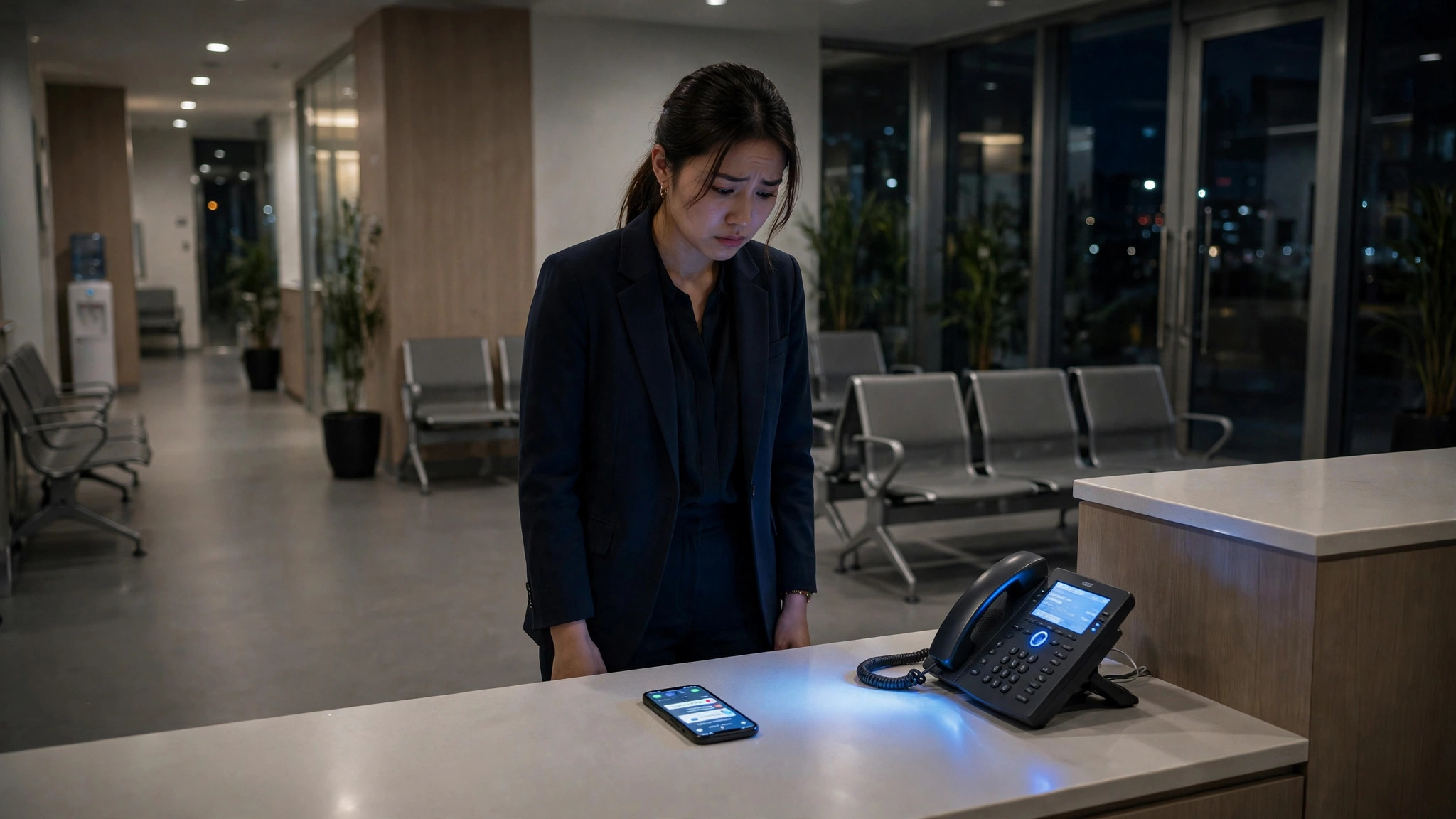
Dental pain doesn't respect office hours. A patient with a throbbing tooth messages your clinic at 1 AM: "Are you open tomorrow? How much is a root canal?" If that message waits until morning, the patient has already called the clinic that answered. In healthcare, speed of response isn't just good service — it's the deciding factor.
An AI chatbot for your clinic's website and Instagram acts as a tireless front desk. It answers treatment and pricing questions from your real price list, books appointments into your actual availability, collects the details your staff needs, and sends reminders so patients show up. Your team arrives to a full, confirmed schedule. Home-service businesses run the same playbook — see how an AI chatbot for plumbers handles emergency triage between jobs.
What patients ask (and what the chatbot answers)
- "Do you treat emergencies?" — explains your emergency policy and offers the next available urgent slot.
- "How much does a cleaning/whitening/implant cost?" — quotes from your price list, no guessing.
- "Do you take my insurance?" — answers from your accepted-providers list.
- "Where are you located? What are your hours?" — instant, accurate, every time.
- "I need to reschedule." — moves the appointment and confirms the new time in seconds.
Booking without the phone tag
Traditional booking is a game of phone tag: patient calls, clinic is busy, patient leaves a voicemail, staff calls back, patient is busy. A chatbot collapses this into a two-minute conversation. The patient picks a slot, confirms their details, and gets an instant confirmation with pre-visit instructions. Fewer steps means fewer drop-offs — and a front desk freed from the phone.
Reminders that actually reduce no-shows
A missed dental appointment wastes expensive chair time. Automated reminders — sent a day before, with a simple confirm-or-reschedule option — are the highest-ROI workflow a clinic can install. Patients who confirm show up; patients who need to move their visit do it early enough for you to refill the slot. It's a small workflow with an outsized effect on revenue. Restaurants use the identical tactic for tables — our guide to WhatsApp automation for restaurants shows the reminder flow step by step.
Trust and compliance matter
A clinic chatbot must be careful by design. It should answer administrative questions confidently but never diagnose or give medical advice — instead, it routes clinical questions to your team with full context. It should state clearly that it's an automated assistant, collect only the information you actually need, and hand over to a human the moment a conversation turns sensitive. Done right, patients experience faster service and your practice stays firmly in control. The American Dental Association publishes practical guidance on patient communication — worth reviewing so your automated messages match professional standards.
How to roll it out without disrupting the practice
Introduce the chatbot quietly and carefully. Start on your website only, handling FAQs and appointment requests — the lowest-risk conversations. Let your front-desk team review transcripts for two weeks and flag anything they'd have answered differently; use that feedback to refine responses. Then extend to Instagram DMs, where new-patient discovery happens. Train your staff on the handover: when the chatbot escalates, the team should see the full conversation so the patient never repeats themselves. A smooth rollout builds staff confidence, and confident staff recommend the chatbot to patients instead of working around it.
Your patients already expect instant answers everywhere else in their lives. A clinic chatbot simply brings your front desk up to the same standard.
Want to see one answering as your clinic? A free custom demo builds the chatbot around your real treatments, prices, and hours — test it with the questions your patients actually ask. Request yours for your dental clinic at https://replypilot-site.vercel.app/, no strings either way.
What the front desk does with the hours it gets back
Here is the part nobody talks about: a chatbot does not replace your front desk, it upgrades it. When the phone stops ringing every ninety seconds, your receptionist finally has time for the work that actually needs a human. Calling back the anxious patient who needs reassurance before a root canal. Sorting out the insurance pre-authorization that has been sitting for a week. Greeting walk-ins properly instead of waving them to a chair while juggling three calls. Clinic owners often say their receptionists go from dreading Mondays to actually enjoying patient conversations again — because the repetitive questions are handled and they can focus on people. That is the real return on a clinic chatbot. Not just more bookings, but a calmer, kinder front desk that makes patients feel looked after from the first hello.
What Your Dental Chatbot Should Never Do
A dental chatbot holds a special position of trust. People ask it about pain, money, and fear. That means hard boundaries, written down and checked regularly:
- Never diagnose. "It sounds like you need a root canal" is forbidden — even when it seems obvious. Describe options, then book the dentist.
- Never quote treatment plans or total costs for complex work. Give price ranges from your list; the dentist gives the plan.
- Never discuss test results or treatment outcomes over chat. Those conversations belong with the clinician, face to face.
- Never keep a patient waiting when they are in pain. Urgent symptoms escalate to a human immediately, no queue.
- Never share one patient's information with another. Not even "your husband's appointment is at 3." Privacy is absolute.
Patients actually relax when they hear clear boundaries. "I'm not able to diagnose — but I can get you seen today" builds more trust than a confident guess ever could. And every boundary you set is one less risk for the practice.
Put the boundaries where the chatbot can see them — in its instructions, in plain language, reviewed by someone who understands patient care. Then spot-check transcripts every month with one question in mind: did it stay inside the lines? One careful review a month keeps a year's worth of conversations safe.
How to Answer Price Questions Without Scaring Patients Off
Price is the number-one reason patients hesitate, and the number-one question your chatbot will get. Answer it badly and they vanish. Answer it well and they book.
Always give a real number from your price list — never "it depends" with nothing attached. But pair it with context: "A standard cleaning is listed at our regular fee. The exact cost depends on what the dentist finds, and you will always approve the plan before we start anything." That sentence removes the fear of a surprise bill, which is what patients are actually afraid of.
If you offer payment plans, say so early. Many patients assume they cannot afford treatment and never ask. One line — "we offer payment plans, and I can explain how they work" — keeps them in the conversation instead of walking away. And when a treatment is genuinely expensive, honesty plus options beats silence every time.
Also train it on the questions behind the price question. "How much is an implant?" is often really "I'm embarrassed about my teeth and afraid of being judged." A chatbot that answers the price warmly — without rushing, without upselling — makes it safe to ask the next question. That safety is what turns a price shopper into your patient.
Calming the Nervous Patient Before They Ever Sit in the Chair
A big share of your new patients are scared. Not mildly nervous — genuinely afraid of the dentist. Many of them will never call to say so. But they might type it to a chatbot at midnight, when nobody is watching.
Train the chatbot to recognize fear and respond like your kindest receptionist. Explain what happens at a first visit step by step, in plain words, with no jargon. "The dentist will look, take an X-ray, and talk you through everything before doing anything." Offer the practical comforts your clinic has — numbing options, breaks whenever they need one, bringing someone along for support.
Never rush an anxious patient toward booking. Let them ask five questions. Answer all five warmly. The patient who arrives calm because the chatbot listened is the patient who actually shows up — and brings their family next time. Patience in the chat becomes loyalty in the chair.
It also helps to tell anxious patients what will not happen. "Nothing will be done without your permission" and "you can stop us at any time" are the two sentences nervous patients most need to hear. Simple, true, and calming — the chatbot should offer them before being asked.
Mistakes Clinics Make That Turn Patients Away
The chatbot is often the first impression of your clinic. These mistakes ruin it before the patient ever walks in:
- Sounding like a robot receptionist. "Please select from the following options" feels cold in healthcare. Warm, simple sentences win.
- Asking for too much upfront. A name and a callback number is enough to start. The full medical history can wait for the visit.
- Outdated prices or hours. Nothing destroys trust faster than the chatbot quoting last year's fee. Review the facts monthly.
- No human escape. A patient in pain who cannot reach a person will call the next clinic on Google.
- Forgetting the confirmation. A booked appointment with no confirmation message feels uncertain. Confirm, remind, reassure.
Want this for your dental clinics?
ReplyPilot builds a custom ai chatbot setup for your dental clinics — answering customer questions instantly, taking orders and bookings, and handing off to you when a human is needed.
Ask on WhatsApp — it's freeNone of these need new software. They need someone reading the transcripts and caring about the answers. Fifteen minutes a week keeps the whole thing honest.
The most common version of this mistake is setting the chatbot up once and never looking at it again. Prices change, hours change, new treatments arrive — and the chatbot keeps answering from last year. Put a monthly fifteen-minute review on someone's calendar. It is the cheapest quality control in the clinic.
A Day in the Life: Your Chatbot's Busiest Tuesday
7:15 AM — a mother messages before the school run: her son chipped a tooth. The chatbot offers today's emergency slot and tells her what to do with the tooth fragment. 9:30 AM — a new patient asks about whitening prices while comparing three clinics. Real numbers, plus the payment plan mention, win the booking.
1:00 PM — during the lunch rush, four people ask about Saturday availability. The chatbot handles all four at once while your receptionist eats lunch uninterrupted. 6:45 PM — after closing, someone reschedules tomorrow's appointment, and the freed slot is offered to the waitlist automatically. 11:20 PM — a patient in pain gets the emergency instructions and the morning's first urgent slot.
Your team did none of this manually. They arrived on Wednesday to a full, confirmed, calm schedule — and a receptionist who actually slept well. That is the product, measured in a single ordinary Tuesday.
Notice what did not happen on that Tuesday: nobody was put on hold, nobody waited until morning for an answer, and nobody's question went into a voicemail nobody checks. Every one of those small failures used to cost the clinic a patient. Now they just do not happen.
How Do You Know Your Dental Bot Is Working?
You do not need fancy dashboards. Watch four simple things:
- New-patient bookings from chat. Ask "how did you hear about us?" at the visit and count the ones who say the website chat.
- No-show trend. Compare the months before and after reminders started. The direction should be obvious.
- Phone volume. If the front desk gets fewer "what are your hours?" calls, the chatbot is absorbing them.
- Conversation tone. Read a few transcripts a week. The way patients talk in the chat tells you everything about how the clinic feels.
If bookings are up, the phone is calmer, and patients sound happy in the transcripts — it is working. If something is off, the transcripts will tell you exactly what is wrong, in the patients' own words. That feedback is worth more than any report.
You can also just ask. At the end of a first visit, "did the website chat help you book?" takes five seconds and gives you the honest answer no dashboard can. Patients will tell you what worked and what felt strange. That feedback loop — ask, listen, adjust — is how a good chatbot becomes a great one over a few months.
Handling the Tricky Ones: Price Shoppers, Angry Patients, Worried Parents
Price shoppers will ask three clinics the same question and pick the cheapest. Do not race to the bottom — answer with the price plus what it includes. "Our cleaning includes the polish and the dentist's check, not just the hygienist." Value, explained plainly, beats a lower number with no context.
Angry patients are harder. Someone had a bad experience and they are typing in caps. Acknowledge, do not defend: "I'm really sorry that happened — let me get our practice manager to call you today." Then actually escalate, with the full conversation attached. An angry patient handled well often becomes the most loyal one you have.
Worried parents ask about everything — pain, safety, "will it hurt my child?" Answer patiently, offer the family appointment option, and never rush them toward booking. Parents who trust you bring the whole family for years. Every tricky conversation is a loyalty test, and the chatbot takes it daily.
Then there is the quiet one: the patient who asks three careful questions and says "I'll think about it." Do not let the chatbot push. A gentle "no rush — I'm here if questions come up later" respects their pace. Many of them return within the week, because the clinic that did not pressure them feels like the safe choice. In healthcare, patience is a marketing strategy.
What to Tell Your Team Before Launch
The chatbot will fail if your staff secretly works around it. Before launch, gather the front desk and explain what it does and — just as important — what it does not do. It does not replace anyone. It handles the repetitive questions so they can handle the people. Show them the handover: when the chatbot escalates, the team sees the full conversation, so the patient never repeats themselves.
Ask the team to read transcripts for the first two weeks and flag anything they would have answered differently. Their corrections are pure gold — nobody knows your patients better. A team that helped train the chatbot will recommend it to patients. A team that was never consulted will quietly tell patients to "just call instead." Launch is a people project first, a technology project second.
Emergency handling done right
Dental emergencies are where a chatbot proves its worth — or does real harm. The rule is simple: the chatbot never diagnoses, but it always acts fast. Severe pain, swelling, or trauma should trigger an immediate escalation path: the next available emergency slot, clear instructions on what to do right now, and a direct line to the on-call team. Routine questions get routine answers; anything urgent gets a human within minutes. Design this escalation path first, before any other feature, because it's the one conversation where speed genuinely matters for health — and it's also the conversation that turns a panicked stranger into a loyal patient.
Answering “Do You Take My Insurance?”
This is the question that kills more bookings than any other in dentistry. A patient finds your clinic, likes what they see, and then wonders about insurance — and if the answer is not instant, they move on to the next clinic. The chatbot answers in seconds, from your real list of accepted plans.
It does two things at once: confirms whether you work with their plan, and collects what your front desk needs to verify it — the patient’s name, date of birth, and member ID. That verification happens before the visit, not during it. If verification hits a snag, the patient hears about it days before the visit — not in the waiting room. The patient arrives knowing their coverage is sorted, and your receptionist is not making awkward phone calls while the patient waits in the chair.
Be honest about the limits. “We work with most major plans — send me yours and I’ll check” is better than a confident yes that turns out wrong. And if you do not take their insurance, say so plainly and offer the self-pay prices from your price list. Patients respect a straight answer far more than a surprise bill.
Booking the Whole Family in One Chat
“Can I book checkups for me, my husband, and our two kids?” A family of four is four appointments — or one back-to-back block on a Saturday morning, which is what the family actually wants. Doing this by phone is a scheduling puzzle. In a chat, it is just a list.
The chatbot collects each person — name, age, what they need — and finds consecutive slots that fit everyone. Kids get booked with the dentist who is best with children, if you have one. The whole family gets one confirmation with everyone’s time, and one reminder the day before. Nobody gets forgotten, nobody double-books.
Families are also how clinics grow quietly. The parent who brings two kids tells the school group chat. The chatbot makes the family booking the easiest one you offer — and easy bookings get recommended.
Getting New-Patient Paperwork Done Before the Visit
The clipboard in the waiting room is a terrible first impression. A new patient arrives nervous, and the first thing you hand them is a form asking for their life story while the clock ticks. Move it to the chat, days before, and the first visit starts with a smile instead of paperwork.
After booking, the chatbot sends the forms one at a time — personal details, medical history, insurance cards, consent forms — each as a simple step, not a wall of questions. Patients can upload photos of their insurance card and ID straight into the chat. Everything lands in the patient’s file before they walk in, and your front desk just verifies instead of typing.
Keep privacy tight here. The chatbot should collect only what you actually need, say so plainly, and never ask for sensitive details it has no use for. Patients notice when a form respects their time and their privacy — and that respect starts the clinical relationship on the right foot.
Checking In After Treatment
The visit does not end when the patient leaves the chair. A root canal on Tuesday, a worried patient on Wednesday night — “is this swelling normal?” Most clinics leave that worry unanswered until the patient calls. A chatbot can check in first, and that changes everything.
A day or two after treatment, one gentle message: “Hi, just checking in — how are you feeling after your visit?” If the patient says they are fine, the chatbot wishes them well and reminds them of the follow-up appointment. If they mention pain, swelling, or worry, the chatbot shares your clinic’s written aftercare guidance — the same sheet you hand out in person — and offers to connect them with the team right away.
The boundary is absolute: the chatbot shares your published aftercare information and routes every clinical concern to a human. It never diagnoses, never says “that’s normal,” never adjusts advice. What it does is make sure no patient sits at home worrying in silence — and that alone turns anxious patients into loyal ones.
Healthcare-adjacent businesses share compliance needs — WhatsApp automation for pharmacies handles prescription queries and refill reminders.
Medical clinics share the same booking challenges — an AI chatbot for veterinary clinics handles appointment requests and urgent-care questions.
Clinic bookings follow the same pattern — an AI chatbot for physiotherapy clinics manages appointments and treatment FAQs.
Frequently Asked Questions
Can an AI chatbot book dental appointments?
Yes. Patients describe their need — checkup, cleaning, toothache — and the chatbot offers your real open slots. It books them in and sends a confirmation. Your front desk stops playing phone tag.
How do chatbot reminders reduce dental no-shows?
It sends a confirmation at booking and a reminder 24 hours before. Patients confirm or reschedule with one tap. Dental no-shows are expensive — an empty chair earns nothing — so reminders pay for themselves fast.
Can the dental chatbot handle emergency enquiries?
Yes, with care. You define emergency triggers — severe pain, swelling, trauma — and those get immediate instructions plus priority booking. Routine questions get scheduled normally. Real emergencies never wait in a queue.
Is a dental chatbot compliant with patient privacy rules?
Reputable providers use encrypted messaging and strict data handling. You should confirm the provider's compliance with your local health privacy rules before going live. Never let it store sensitive health details longer than needed.
How much does a chatbot cost for a dental clinic?
Typically a monthly fee based on patient message volume. A single rescued appointment — especially a high-value treatment — covers the cost many times over. Clinics with busy front desks benefit most.