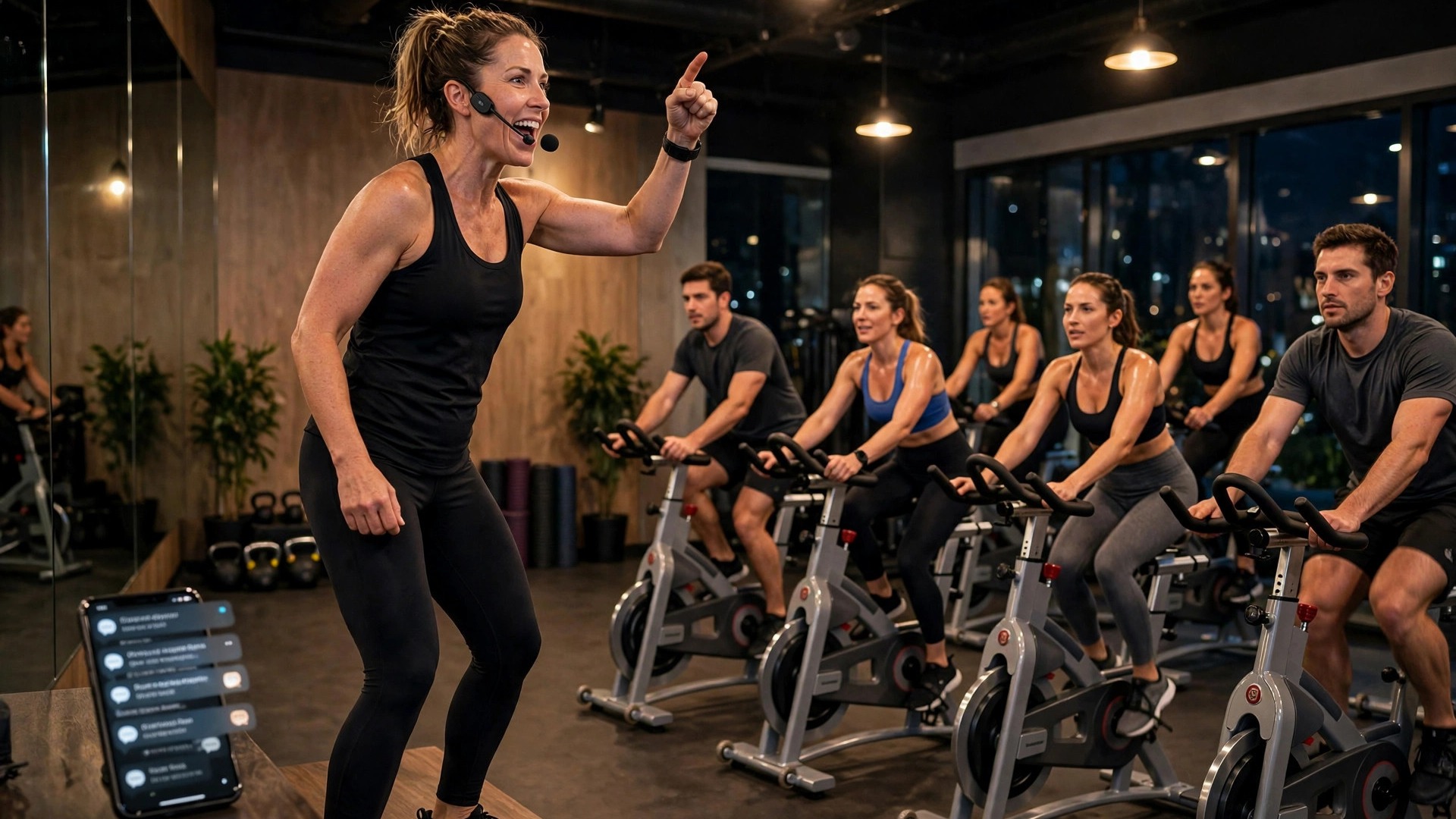
It is 7:40 in the evening and you are mid-spin class, music loud, twenty riders pushing through the last climb. On your website, a visitor has just asked whether there is a trial session this Saturday and what the off-peak membership costs. That enquiry sits unanswered for ninety minutes. By the time you read it, the person has tried the studio down the road. An AI chatbot for gyms exists to fix exactly this moment: the enquiry that arrives while you are coaching.
Why gym leads go cold so fast
Fitness is an impulse-driven purchase. Someone searching for a gym tonight wants to start soon. Their motivation is highest in the minutes after they reach out, and competitors are one click away. Slow replies kill that momentum. The studios that win are the ones that answer first, with something concrete: a tour slot, a trial time, a price. That speed is the real job of an AI chatbot for gyms. It greets the visitor the second they arrive, qualifies them gently, and turns interest into a booked tour before the impulse fades. Salons run the same first-five-minutes playbook on Instagram — see Instagram DM automation for salons.
What an AI chatbot for gyms should actually handle
Forget the sci-fi version of a gym bot. A useful gym membership chatbot answers the same questions your staff answer every day: opening hours, class schedule, prices, trial options, parking, personal training, and whether beginners are welcome. The trick is teaching it with your real information: your actual timetable, your real price list, your actual trial policy. A chatbot quoting wrong prices is worse than no chatbot, so the first task is always writing down the answers your team gives today and feeding them in.
Start with after-hours tour booking
If you automate one thing first, make it tour booking outside your staffed hours. Most fitness studio lead capture happens when nobody is at the desk: late evenings, early mornings, and weekends between classes. The chatbot should ask two or three friendly questions — what are you interested in, when would you like to visit, what is your name — then offer real time slots pulled from your calendar. When the tour is booked, it confirms the visit and sends a reminder with parking and arrival details. That single flow recovers the enquiries you used to find cold in your inbox the next morning.
Answer pricing questions from your real price list
Pricing questions are where a gym membership chatbot earns its keep. Visitors hesitate to submit a form just to ask what membership costs, so they leave instead. Give the chatbot your full price list — monthly, annual, off-peak, student, couples — and the honest rules behind each plan. Teach it to compare options in plain language: if someone trains twice a week after work, which plan costs least. Mention the trial session, because the trial is what converts price-shoppers into members. And never let it invent prices. Photographers answer pricing questions the same careful way — our guide to AI chatbots for photographers shows how to share numbers without the awkward dance.
The five jobs worth automating first
- After-hours tour and trial booking, with real calendar slots, confirmations and reminders
- Pricing and plan questions answered from your real price list, with an honest recommendation
- Class schedule questions: which class, when, how to book a spot, what beginners need
- Win-back messages for lapsed members: a warm check-in, a comeback offer, an easy rejoin path
- Lead qualification before you call: goal, preferred time, experience level, so your callback converts
The win-back job deserves special attention. Members who cancelled or stopped showing up are your cheapest new revenue, but most studios never contact them because the calls feel awkward. A chatbot can start softly with a check-in message and a simple comeback option, such as a free week or a class that fits their old routine. Keep the tone warm, never pushy, and offer a rejoin path that needs no human involvement until they say yes.
Keeping the community feel with a human handover
Gyms sell belonging, and no one wants their community to feel robotic. Keep the chatbot's tone warm and personal, like your best receptionist. More importantly, build a clear human handover: the moment a conversation turns emotional, complicated or sales-sensitive, a real person takes over — and say so upfront. Do not bury your phone number either — some people will always want a human, and hiding it breeds distrust. Members forgive a bot for simple questions. They never forgive feeling trapped by one. The Health & Fitness Association (formerly IHRSA) publishes member-retention research — handy context when you design your win-back messages.
Rolling out an AI chatbot for gyms: a simple 4-week plan
You do not need a grand launch. Start small and add one job at a time. Week one: write down your twenty most-asked questions and answers, and put the chatbot on your pricing and schedule pages only. Week two: connect tour booking to your real calendar, and test it yourself at 11pm — that is when your prospects use it. Week three: add the chatbot to WhatsApp, since that is where lapsed members and casual enquirers actually reply. Week four: review the conversations, fix every wrong answer, and only then extend it to your homepage. Two warnings as you go: never let the chatbot promise things your team cannot deliver, and route injury or medical questions to a person immediately, with no debate.
A Busy Saturday With Your Chatbot: Hour by Hour
It is Saturday, 6:10am. You open up the studio, put the coffee on, and glance at your phone. Three new tour bookings came in overnight. A woman asked about off-peak prices at 11:40pm and booked a Monday tour. A dad asked whether his teenager can join the youth class and booked a trial for next Saturday. A lapsed member from last year asked if the evening timetable has changed. Nobody waited for you to wake up.
By 9am you are coaching a packed class, music loud, no chance to check your phone. The chatbot answers a parking question, tells someone the spin class is full and offers the 11am slot instead, and sends today's tour reminders with your address and parking tips. The lapsed member replies to the win-back message from Thursday: “Maybe. What are the evening classes like now?” The chatbot answers from the new timetable and offers her a free comeback week. She says she will think about it — which is further than she got in twelve months of silence.
Lunch rush. A price-shopper asks for the cheapest plan. The chatbot compares honestly — twice a week after work means the off-peak plan costs less than the full one — and mentions the trial session. No pressure, just a clear answer and a next step. He books the trial. Meanwhile a current member asks how to freeze her membership for a month while she travels. That one goes to you, because money conversations belong to a human.
By evening you are done. Fifteen conversations happened today. You handled two personally: one member asking about knee pain (straight to a coach, as it should be) and the membership freeze. Everything else ran itself. That is what the system is for — not replacing your Saturday, but making sure your Saturday was not spent typing answers on your phone between sets.
What Should the Chatbot Never Do on Its Own?
A chatbot is only as safe as its limits. The most important job is not answering questions — it is knowing which questions are not its to answer. Write these limits down before you launch, because they protect your members and your reputation.
Health and injury questions go straight to a human. Always. If someone says “my knee hurts when I squat, should I keep training?”, the chatbot must not give exercise advice. The correct answer is warm and short: “That is a question for one of our coaches — let me get someone to call you.” No stretching tips, no “try icing it”, nothing. You run a gym, not a clinic, and one bad piece of health advice can do real harm.
Money promises are off limits too. The chatbot can explain your prices, but it should never offer discounts, waive joining fees, or agree a special deal to win someone back. One generous promise from a chatbot becomes a queue of members demanding the same deal at the front desk. If someone pushes for a discount, the chatbot collects their details and hands over to you. Discounts are your decision, made in daylight, not at midnight by software.
And it must never invent availability. If the timetable data is old and the 7am spin class was cancelled last week, the chatbot saying “see you at 7am” sends a member to a dark studio. That is why your timetable feed matters more than any clever feature. When in doubt, the chatbot should say “let me check that with the team” — an honest pause beats a confident wrong answer every time.
Want this for your gyms fitness studios?
ReplyPilot builds a custom ai chatbot setup for your gyms fitness studios — answering customer questions instantly, taking orders and bookings, and handing off to you when a human is needed.
Ask on WhatsApp — it's freeThe Questions Gym Owners Forget to Teach It
Most owners train their chatbot on prices and class times, then stop. But the questions that stall a conversation are the small practical ones. A visitor will not book a tour until she knows the boring details.
- Can I freeze or pause my membership? For how long, and does it cost anything?
- What is the cancellation policy — notice period, fees, and how do I actually cancel?
- Is there parking? Is it free? What about the nearest bus or train stop?
- Can I bring my kids? Is there a minimum age for the gym floor and for classes?
- What should I bring to my first class — towel, water, special shoes?
- Are there showers and lockers? Do I need my own padlock?
- Do you offer guest passes? Can a friend try a class with me?
- What happens on public holidays — are you open, and do classes run?
Read that list and notice something: every answer already exists in your head. You have answered each of them a hundred times at the front desk. Writing them down once is an afternoon's work, and it ends those questions forever.
The second thing owners forget is seasonal change. Holiday timetables, summer schedule changes, a class that moves rooms — if the chatbot still answers from January's timetable in July, members stop trusting it. Put a monthly reminder in your calendar: ten minutes to check the answers are still true. That ten minutes is the difference between a chatbot that helps and one that slowly goes stale.
Teaching It Your Timetable Without the Headache
Your class timetable is the heart of the whole setup. If the chatbot answers schedule questions well, members trust it with everything else. If it gets times wrong, nothing else matters. So take the setup seriously — it is simpler than it sounds.
Start by exporting your real timetable: class names, days, times, coaches, room, and how many spots each class holds. Include the boring details — which classes need booking, which are drop-in, what beginners should know. Then add the exceptions: holiday hours, classes that pause in summer, the early Friday close. Exceptions are where chatbots usually fail, because nobody told them the exceptions exist.
Next, decide what the chatbot does when a class is full. “That class is full” is a dead end. “That class is full, but there are three spots in the 6:30pm class — shall I book you in?” keeps the conversation alive. Teach it the waitlist too: if someone cancels, the next person on the list gets the spot automatically, with a message telling them.
Finally, test it like a stranger would. Ask it about tonight's classes at 6pm, when you know the answer. Ask about a holiday next month. Ask something slightly wrong — “is there yoga at 8?” when yoga is at 8:30 — and see if it corrects you gently. Every wrong answer you catch in testing is a member you never frustrated.
What Should the Chatbot Do When a Member Wants to Cancel?
Cancellations are the hardest conversations in a gym, and the worst place for a clumsy bot. A member typing “I want to cancel” is often frustrated, embarrassed about money, or just tired. The chatbot's job here is not to argue — it is to listen, make it easy, and leave the door open.
The right flow is simple. First, acknowledge without pressure: “No problem — I can help with that.” Then ask one gentle question: “Is there anything we could fix first — a different plan, or a pause instead of cancelling?” Some members just need the off-peak plan or a two-month freeze, and they stay. But if the answer is still cancel, the chatbot processes it cleanly and confirms the end date and any final payment. No maze, no retention script.
What it must never do: guilt-trip (“but you've made such progress!”), stall (“let me transfer you” into a black hole), or hide the cancellation option. Tricks poison trust. A member who cancels easily tells friends the gym was fair. A member who had to fight to leave tells everyone.
Two weeks after a clean cancellation, one warm message is fine: “Hope you're doing well — the door's open whenever you want to come back, and your first week back is on us.” That is a win-back with dignity. Many of your best returning members left once and came back, because leaving felt easy.
How Do You Know It Is Actually Working?
A chatbot is not working because it is installed. It is working because your numbers move. Pick five numbers and check them monthly — that is all it takes to know whether the setup is earning its keep.
- Tours and trials booked per week — through the chatbot, after hours especially.
- Tour show-up rate — bookings are vanity, arrivals are revenue.
- First-response time — it should be seconds, at 2am and 2pm alike.
- Questions the chatbot could not answer — your to-do list for new answers.
- Win-back replies — how many lapsed members answered, and how many returned.
The most useful habit is reading ten conversation transcripts a month. Not a hundred — ten. You will spot the same missed question three times, add the answer once, and the chatbot improves forever. You will also catch tone problems: a reply that reads fine to you might feel cold to a nervous first-timer.
Watch the handover rate too. If the chatbot hands over to a human constantly, it is undertrained — feed it more answers. If it never hands over, be suspicious — it might be guessing instead of asking for help. A healthy setup hands over the emotional, medical, and money conversations, and handles the routine ones alone.
Give it three months before you judge. Month one is training data. Month two is fixes. Month three is when the numbers settle and you can see the real shape of it: more tours, fewer missed enquiries, and evenings that belong to you again.
Want this working in your gym?
The studios that grow fastest are not the ones with the biggest ad budgets. They are the ones that answer every enquiry in the first five minutes, at any hour, with something real to offer. If you would like to see what that looks like on your own website — your timetable, your prices, your tone — you can get a free custom demo built for your gym at https://replypilot-site.vercel.app/ and judge it for yourself, no strings either way.
Appointment-based businesses live or die by response speed — an AI chatbot for barbershops answers in seconds while the barber keeps cutting.
Health-conscious customers expect instant replies — WhatsApp automation for juice bars handles orders and loyalty messages automatically.
Fitness businesses convert followers into members via DM — see how Instagram DM automation for dance studios turns enquiries into bookings.
Wellness studios convert through quick answers — an AI chatbot for yoga studios handles class schedules and membership questions.
Frequently Asked Questions
Can an AI chatbot book gym tours after hours?
Yes. Someone decides at 9pm they want to join a gym; the chatbot answers pricing questions and books a tour for tomorrow. By morning you have a tour booked instead of a visitor who already joined a competitor.
How much does a chatbot cost for a fitness studio?
Usually a modest monthly fee for a gym. A single new membership covers it. Studios running ads benefit most — the chatbot converts the clicks you are already paying for.
Can the gym chatbot win back members who cancelled?
Yes. It messages lapsed members with a friendly check-in and a comeback offer. Win-back is far cheaper than finding new members, and automation makes it happen consistently instead of never.
Will the chatbot answer "How much is membership?" without scaring people off?
Yes — and this is important. Instead of hiding prices, it answers clearly and immediately mentions the trial or tour. Transparency plus a next step converts better than "call us for prices."
Can the fitness chatbot handle class bookings?
Yes. Members ask "Any spin slots tomorrow morning?" and it checks your schedule and books them in. It also manages waitlists — when someone cancels, the next person gets the spot automatically.