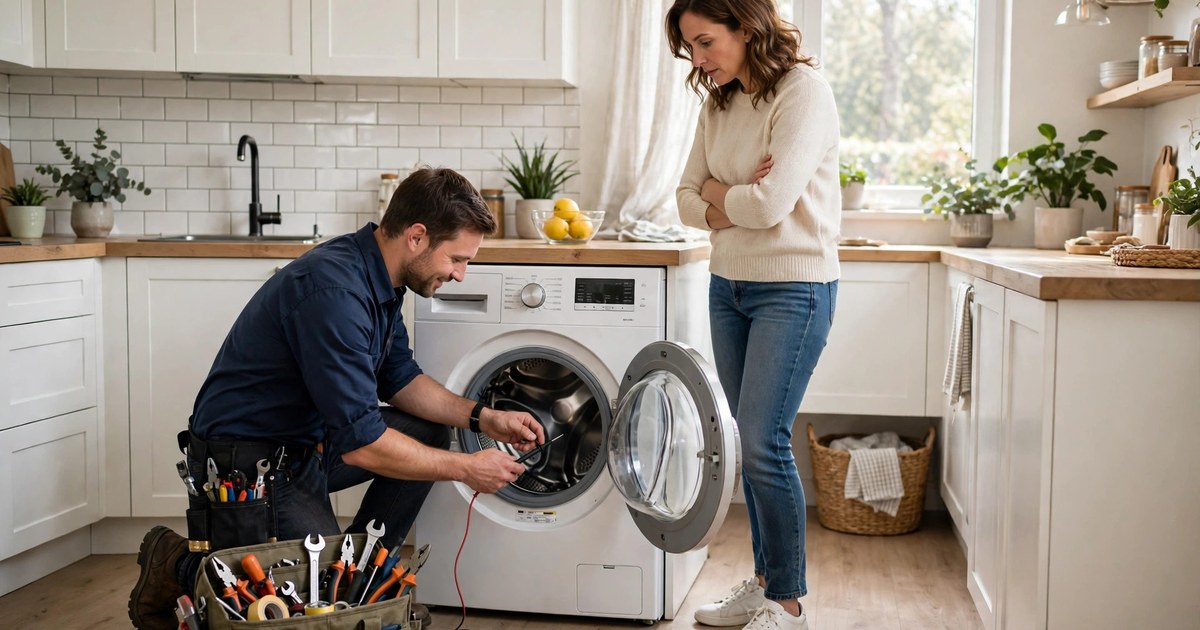
It is just after nine on a wet Tuesday night at Fix-It Fast Appliances, a small repair shop run by a fictional owner named Daniyal. Across town, a washing machine has stopped mid-cycle, full of water and school clothes. The drum will not drain. The floor is wet. The owner of the home stands in soaked socks, phone in hand.
She does not fill in a form on a website. She does not leave a voice mail and hope. She opens WhatsApp and sends a short message to the first repair shop she finds: "Washer full of water, will not drain, floor is wet, please help."
Daniyal is under a fridge at another job, with a torch in his teeth. His best tech is driving home. No one sees that message for two hours. By then, the woman has booked the shop that wrote back in one minute. That is the whole race in this trade, and you can lose it while you do good work with both hands busy.
Quick answer: WhatsApp automation for appliance repair replies to each new message in seconds, asks what broke, takes a photo or short video of the fault, saves the model number and any error code, states your callout fee, books the visit, and sends updates until the job is done.
Why a dead fridge never waits for a callback
A broken appliance is not a small thing. A dead fridge means food going soft and money in the bin. A washer that will not spin means no clean clothes for school. An oven that dies on a Friday ruins the meal plan for the weekend. The person who writes to you is not calm, and they will not wait.
So they write to more than one shop. The customer is not loyal at the start. They are wet, hot, or fed up, and they want the first clear reply that sounds like help. If your reply comes hours later, it does not matter that your work is neat or your price is fair. The job is gone.
Your day makes this worse. You are on your knees, in a van, or elbow deep in a dishwasher when the best leads land. You can not stop a live job and run a sales chat each time your phone buzzes. Yet the phone is where the work now starts. WhatsApp automation for appliance repair firms closes that gap. It holds the chat with care until you can step in, and most chats will not need you until the visit is set.
What the automation actually does, step by step
Think of it as a calm front desk on your business number that never sleeps. It does not fix machines. It does the talk work around the fix, the same way, each time.
First, it replies at once, not with a cold line that says you will get back to them. It greets the customer and asks which appliance has stopped working. One plain question at a time, so a stressed person can keep up.
Next, it sorts the job. A warm fridge, a washer that will not drain, an oven that will not heat, and a dryer that bangs are not the same call. The flow asks what the machine does, when it last worked, and if there is water, a bad smell, or a strange noise. If the words point to risk, like a gas smell or water near a plug socket, it stops, tells the customer to stay safe and call for urgent help, then flags you at once.
Then it books. It checks your real diary, offers real slots, and takes the name, address, and access notes, like a gate code or a dog in the yard. The customer gets a clear note of the day and time window. No phone tag. No lost note on a job sheet.
Last, it writes the job up. You get one clean record: who, where, which machine, what fault, what was sent, and what slot was booked. You know what you face before you knock. Our WhatsApp automation guide for HVAC companies shows how a sister trade runs the same flow.
How can a photo of a rating plate save a whole second trip?
This sets appliance work apart from most trades. Your tech can fix far more on the first visit if the right facts arrive before the van rolls. A customer can not tell you a drain pump part number. They can send a photo that tells you all of it.
So the flow asks for three things. One, a photo of the rating plate. It sits inside the fridge door, on the washer door rim, or on the oven frame, and holds the brand and model number. Two, a photo or short video of the fault. A clip of a shaking drum or a cracked seal tells your tech more than five lines of text. Three, the error code, typed just as it shows, with a photo if the screen is hard to read.
With those three in hand, you can look up the model, see which pump, belt, element, or board it tends to need for that fault, and check if the part is in your store room or must be ordered. That check is the line between a one-trip fix and the sad talk at the door where you say you must come back next week.
Be clear on one point. The flow does not guess the fault from a photo. It saves the photo, the code, and the words for a human who knows the trade. A photo helps a tech plan. It is not a promise of what is wrong.
The callout fee talk: say it early or argue about it later
More fights in this trade start with the callout fee than with the fix. The customer hears nothing clear up front, then sees a charge on the bill they did not expect. The fix can be great and they still feel stung.
The flow fixes this by saying the fee early, in the chat, before any slot is booked. It states what your callout fee is, what it covers, and what it does not. For most shops that means the visit and the time to find the fault. How the fee is treated if the customer goes ahead with the repair is your rule, so write it once and let the flow use it word for word. If a part must be ordered, say a second visit may be needed and how that is charged.
The customer agrees in the chat before you set off. That saves you the hard talk on the doorstep, and screens out calls that were never going to pay a fair fee, while your van is still parked.
Parts, technician ETA, payment and reviews: the half of the job after the fix
Most shops work hard to win the booking and then go quiet. That quiet is where doubt grows. The customer does not know if the part came in or if the tech is still coming. They ring you mid-job, and a small doubt turns into a bad mood before you arrive.
The flow can carry this half of the job. When a part is on order, it sends a short note and books the return visit when the part lands. When the tech sets off, it sends an arrival window, so the customer can be home. If the tech is held up, a short honest note beats silence each time.
Your customers are already on WhatsApp
ReplyPilot turns your business WhatsApp into an always-on front desk — instant answers, real bookings in your calendar, and a clean handoff to you the moment a conversation needs a person.
Ask on WhatsApp — it's freeAfter the fix, the flow sends the bill or a pay link in the same chat, so there is no hunt for bank details. A day or so later, it can ask how the machine is running. If the washer still hums in a bad way, you hear it in private and can put it right fast. If all is well, it can ask for a short review while the relief is fresh. Our walk-through of WhatsApp automation for electricians shows the same after-job pattern in a trade where the review ask is left late too often.
Do not forget the warranty follow-up. The flow can note the date, check in before it runs out, or send care tips for that model, like how to clean a filter. That keeps your name in the home for the next fault, on the next machine.
If this sounds like the front desk your shop needs, ReplyPilot can build this flow around your own fees, slots, and service area, and you can ask for a free demo first. There is no promise it will fit every shop, and a demo is the honest way to find out before you spend.
What it does NOT do, and why that limit keeps you safe
Now the honest part sales pages skip. This system does not diagnose a machine. It can not tell from a chat if a fridge needs a new board or a new fan. It must never give a firm price for a fault it has not seen. The right line is a range only where you set one, or a plain note that the price is set after an on-site check.
It does not do safety calls. A gas smell, a burnt smell from a plug, or sparks are not chat topics. The flow must use a fixed safety script, tell the customer to keep clear and get urgent help, and hand the chat to you at once. It should never tell a customer to open a machine or test a part with the power on.
It does not find you customers from thin air. It works the chats you already get; if no one writes, you need work on how homes find your number first. It does not run your parts shelf either, so a messy stock list means a weak parts check. And it does not calm a truly angry customer the way you can. When a chat turns hot, its job is to say sorry, take the facts, and get you on the phone fast.
Owners who accept this split do well: the system runs the routine, people own the risk and the hard talks.
Mistakes That Kill Appliance Repair Automation
Most failed setups fail in dull ways that you can fix. Watch for these.
- Letting the flow quote firm prices for unseen faults. A low price in a chat becomes a fight when the true fault costs more. Let it quote only what you have fixed in advance, like the callout fee, and book a check for the rest.
- Asking ten questions before you offer any help. A wall of questions feels like a form, and a person with water on the floor will leave. Start with one warm line, then ask one thing at a time.
- No path for risk words. If a customer writes about a gas smell or sparks and the flow keeps asking for an address, your setup is not safe. Write the safety script first and test it often.
- Never asking for the rating plate photo. Then your tech walks in blind and you pay for a second trip.
- Hiding the callout fee until the bill. Say it in the chat, get a clear yes, and save that yes with the job.
- Going silent after the booking. No part update, no ETA note, no check after the fix. Silence is where trust leaks out of a good job.
- Sending sales blasts to past customers who only agreed to job updates. That can get your number flagged. Only send offers to those who said yes to them.
Fix it yourself, hire office help, or automate? A plain comparison
You have three real ways to run your front desk, and each has a cost.
If you answer yourself, you keep full control at no extra cash cost. But you are the front desk while you are also the tech, the driver, and the parts buyer. Replies wait until your hands are free, just when the customer has moved on. Nights and days off are bare. This works when work is slow, and breaks when work picks up.
If you hire office help, you get a real person who can learn your ways and talk with care, if you have work to fill their hours. The hard parts are cost, sick days, and cover. One person can not be there at nine at night when the fridge dies.
If you automate the chat, the first reply is fast at all hours, the same questions get asked each time, and the job record writes itself. You still need a human for risk, price calls, and angry customers, so it is not a staff swap. Many shops land in the middle: automate the first reply, the facts, the booking, and the updates, and keep a person on call for the rest. To see what the base setup needs, read our WhatsApp Business API setup guide first.
How do you pick a setup without paying for shine?
Start with your own jobs, not a sales deck. Write down your last ten chats. What did people ask? Which facts did your tech wish he had? Where did the chat die? A good setup is built from those real chats, not from bright features you will never use.
Then test the flow as a customer would. Send a washer fault at night from your own phone. Send a rating plate photo and see if it lands on the job record. Type an error code wrong and see if it asks you to check it. Write gas smell and see if the safety script fires and flags a human. If a seller will not let you test these paths, that tells you a lot.
Ask plain questions before you pay. Who owns the number and the data if you leave? Can you change your fee and slots yourself, or must you pay for each small change? What does the flow do when it does not know an answer? The right answer is that it says so and hands the chat to you. A flow that would rather guess is a risk in a trade with gas, water, and mains power in one room.
Last, keep price talk honest. This article will not quote costs, because real costs shift with your country, your message volume, and how much is built for you. Any seller who gives a firm total before they know your jobs is guessing with your money. Get the scope in writing and start small.
From first chat to first booked job: your first two weeks
You do not need a big launch. You need one flow that works, tested on real work.
In the first few days, write the base facts down: service area, hours, callout fee and what it covers, brands you will and will not take on, and your safety script. The flow can only be as clear as the facts you give it.
Next, build the intake flow for your top three faults: a fridge that is not cold, a washer that will not drain or spin, and an oven that will not heat. For each, list the facts your tech needs, where the rating plate sits, and which photo helps most. Add the booking, fee, and parts check steps behind it.
Then run it soft. Let it take new chats while you read each one the same day. Fix one weak question at a time. Check that the ETA note, the bill note, and the day-after check all fire. After two weeks of real chats, you can add more faults, more brands, and the warranty check with a clear head.
The aim is not a clever bot. It is a shop that never leaves a wet floor, a warm fridge, or a dark oven with no reply. That is work you can win tonight, while your hands are on the tools.
Frequently asked questions
Can the flow really take a model number from a photo?
It can save the photo to the job record so your tech can read the plate, and in some setups the text can be pulled out for you to check. A human should still read it before you order a part, since one wrong digit can mean the wrong pump.
What if a customer can not find the rating plate?
The flow can name the common spots, like inside the fridge door or on the washer door rim. If they still can not find it, it should book the visit anyway and note that the plate was not found.
Does it work for gas cookers and other risky jobs?
It can take the booking facts, but not give safety advice past your fixed script. For gas work, many shops let it take the name, address, and fault, then hand the chat to a qualified person at once. No tips, no checks with gas on, and a fast hand-over.
Will it upset older customers who want a real person?
Most people care more about a fast, clear reply than who typed it. The flow should say at the start that it is your automated helper, and offer a real person at any point. If a customer asks for a human, it hands over with the full chat.
What happens when the part is out of stock?
The flow can say the part must be ordered, give a time frame only if you set one, and book the return visit when the part lands. It must not promise a date you have not confirmed. An honest wait keeps trust. A missed date kills it.